
Below are the key morning press headlines, featuring the The Times, The Telegraph, The Daily Mail & more - see the full Press section here.
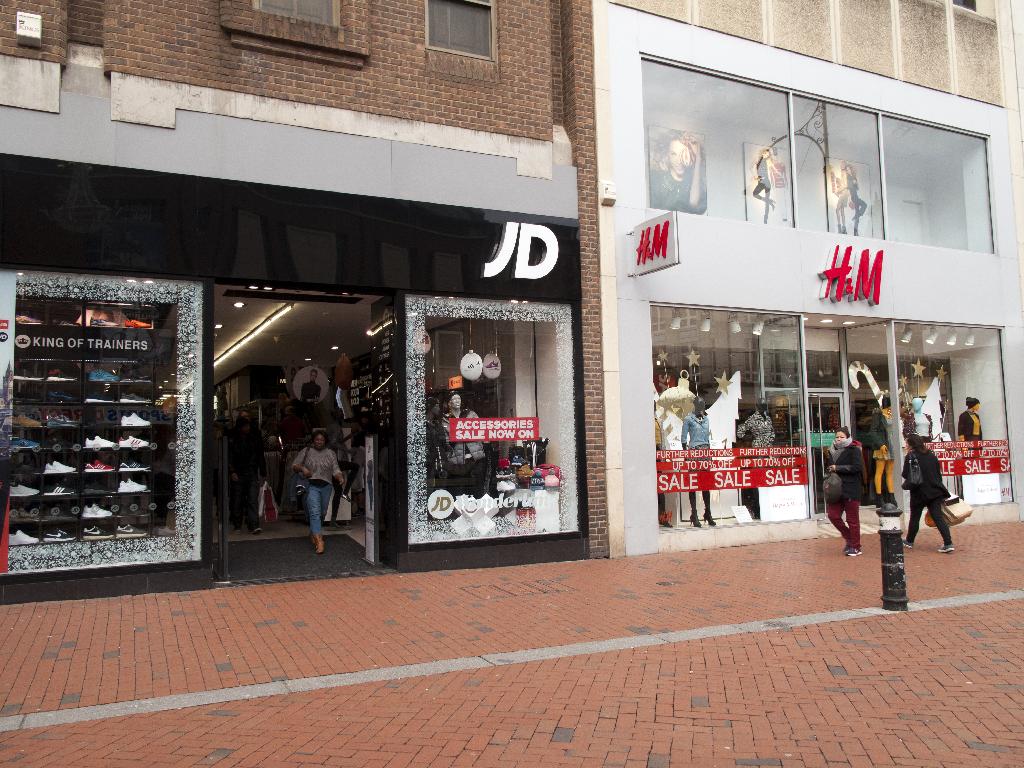
JD Sports Fashion (JD.) has been crowned the best blue-chip stock of the past decade. Shares in the chain, which calls itself the ‘King of Trainers’ and sells brands including Nike and Adidas, have risen 3,200 per cent from around 25p at the start of 2010 to 832.2p last night. A saver who bought £1,000 of JD Sports shares ten years ago would now be sitting on £33,000. Someone who bought them at the turn of the century would now have an investment worth nearly £113,000. The performance is even more eye-catching given the crisis that has engulfed the High Street in recent years. While JD Sports shares have rocketed, other retailers have struggled amid fierce competition from online rivals. Marks & Spencer Group (MKS) was this year relegated from the FTSE 100 for the first time since the index was set up in 1984. Its shares are down 43% since 2010. And JD Sports, which has 2,420 stores and more than 50,000 staff in 19 countries, has left arch-rival Sports Direct International (SPD) in its wake. Shares in Sports Direct, which is led by Mike Ashley and which was recently renamed Frasers, have halved in value since peaking in 2014, although they are still nearly five times higher than at the start of the decade. Russ Mould, investment director at broker AJ Bell, said: ‘JD Sports is a great example of how retailers can still rise above all of the challenges thrown at them by changes in fashion, wage regulations and workers’ rights, and technology, to name but three.’ City commentator David Buik, of Core Spreads, said: ‘To keep producing results of this magnitude is extraordinary. ‘This group has gone from strength to strength, despite the ferocious competition from Sports Direct. JD Sports has focused on vogue brands, which have universal appeal.’ According to analysis by AJ Bell, the next biggest gains after JD Sports came from the equipment rental firm Ashtead Group (AHT) , and the property website Rightmove (RMV) , which delivered returns of 3,120% and 1,260% respectively. Mould said: ‘Such firms have been like gold dust for the past decade. The big question is, will they remain so?’ He said that only one stock in the top ten – the London Stock Exchange Group (LSE) – started the decade as a FTSE 100 company. ‘In other words, if you are looking for the really big winners, you are probably better off by starting to look in the FTSE 250,’ he said. ‘This harks back to Jim Slater’s assertion that ‘elephants don’t gallop’. The established giants simply can’t grow fast enough to necessarily generate these sorts of returns.’ In the FTSE 250, marketing firm 4Imprint Group (FOUR) delivered the highest returns, at 2,950%. The second-biggest was from retailer Games Workshop, at 2,620%. - The Mail
Rio Tinto (RIO) is preparing to resume minerals production at a site in South Africa almost a month after violence forced it to halt operations. The Anglo-Australian mining group said that it expected to return to full operations at its Richards Bay Minerals site in KwaZulu-Natal province in the east of the country by early January and would be back to regular production shortly afterwards. The site processes black beach sand from which it extracts about two million tonnes a year of minerals, making it one of the world’s biggest sources of ilmenite, rutile and zircon. - The Times
The controversial retail tycoon who saved Next (NXT) from collapse in the late 1980s has died aged 76. Sir David Jones, who was suffering from Parkinson’s disease, is credited with rescuing the firm as it teetered on the brink of disaster and rebuilding it into one of the UK’s most successful high street businesses. He joined the fashion chain in 1986 when it bought home shopping catalogue business Grattan. Two years later Sir David became chief executive after a boardroom coup, when Next’s founder George Davies was ousted. When he arrived, Next was worth a meagre £25m, but after nearly 20 years at its helm as chief executive and chairman, the retailer’s market capitalisation rocketed. - The Telegraph
Vodafone Group (VOD) declined after it was among a group of four telecoms companies that were fined a total of €13.2 million by the Dutch consumer regulator for carrying “incorrect and incomplete information” on their websites. The fine levied on Vodafone’s arm in the Netherlands totalled just over €3.1 million. A Vodafone spokesman said the company believed the fine was “disproportionate and unjustified” and said that “legal proceedings are currently being brought against that penalty decision”. - The Times
Costa and Greggs (GRG) are eyeing bumper vegan sales with meat-free toasties and bakes as part of their menus for the New Year. Coffee chain Costa will launch a vegan ham and cheese toastie as part of its largest vegan menu. Greggs, the baker, is expected to offer a meat-free version of its steak bake following the success of a vegan sausage roll it launched in January 2019. Its meat-free steak bake uses Quorn as a substitute. Tyneside-based Greggs caused a buzz last New Year when it rolled out the meatless roll. The vegan alternative to its regular breakfast snacks proved a hit. - The Telegraph
The chairman behind the restructuring of resigned yesterday morning, on the day of its annual meeting, after financial traumas at a company he used to run. David Sefton said that he was stepping down after “rumour and market speculation” over his role at Anglo African Oil & Gas (AAOG) ,an explorer focused on the Republic of the Congo. Iconic said that Mr Sefton had felt that his presence on the board “was having an adverse effect” on the company. - The Times
AstraZeneca (AZN) rounded off a stellar decade as it announced its lynparza ovarian cancer treatment has now been granted approval in the US to treat pancreatic cancer. The nod from the US Food and Drug Administration (FDA) marks the first time that a drug of this kind, which blocks the DNA repair mechanism so cancer cells fail to replicate, has been approved to treat the condition. This was the company’s second big win this month after another drug, to treat breast cancer, won FDA support four months ahead of schedule. Astrazeneca executive Dave Fredrickson said: ‘Patients with advanced pancreatic cancer historically faced poor outcomes due to the aggressive nature of the disease and limited treatment advances over the past few decades. Lynparza is now the only approved targeted medicine in biomarker-selected patients with advanced pancreatic cancer.’ The company is still up 163% over the past decade, compared to a 41% rise in the FTSE 100. - The Mail