
Below are the key morning and weekend press headlines, featuring the The Times, The Telegraph, The Daily Mail & more - see the full Press section here.
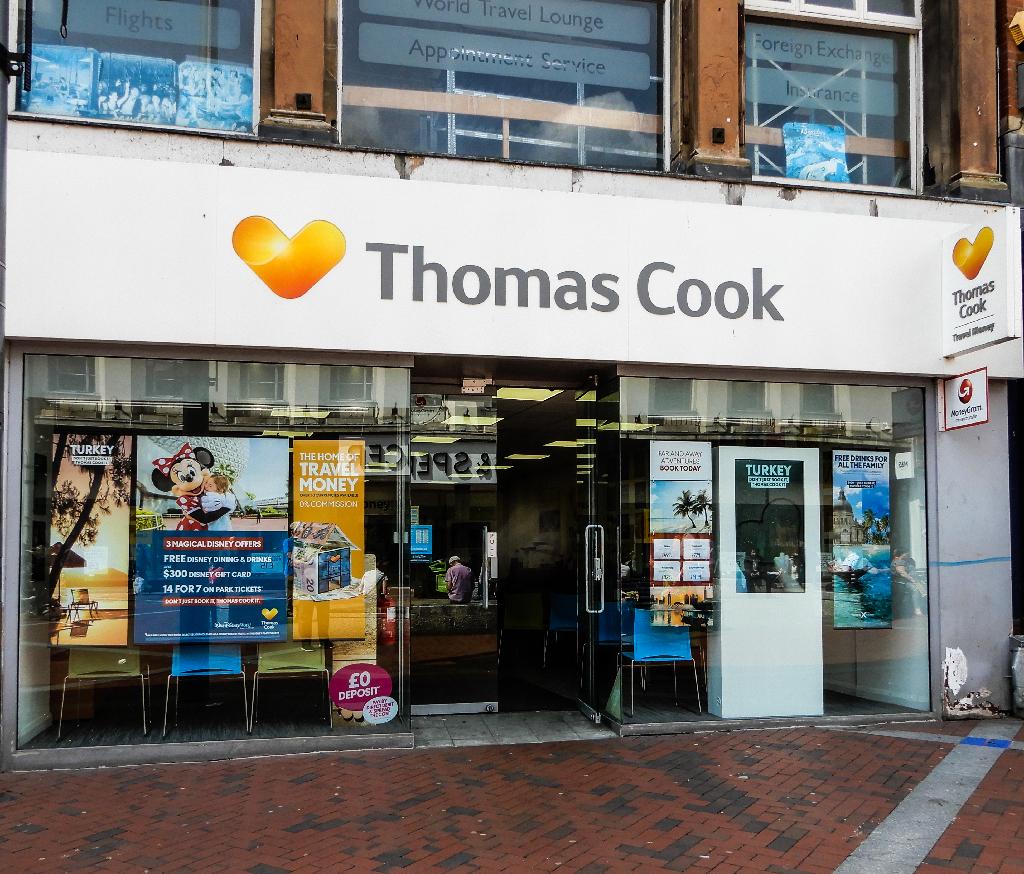
Thomas Cook Group (TCG) has collapsed after rescue talks failed, despite desperate efforts to save the stricken tour operator. Alix Partners, a consultancy renowned for its turnaround expertise, is set to handle the company’s insolvency. Thomas Cook’s board met late last night, and announced that the company had ceased trading in the early hours of this morning. Executives spent all day in talks in London with the group’s banks, bondholders, potential investors and Fosun, the Chinese conglomerate that is the biggest shareholder in the world’s oldest travel group. Other creditors, including credit card companies, were also involved in the discussions. The eleventh-hour talks were held in an attempt to close a £200 million funding gap and avoid a collapse of the business. The meetings, held at the offices of Latham & Watkins, a City law firm, began at 9am and broke up at 5.30pm. Thomas Cook directors convened in the evening to review their options.
Hundreds of smaller travel agents are braced for the fallout from a failure of Thomas Cook Group (TCG) , with industry experts warning of a “domino effect” sweeping across the sector. As the 178-year-old tour operator collapsed early on Monday, travel industry leaders attacked the Government’s “shambolic” introduction of new European Union rules last year which they said they could push other travel agents into the red. The changes in UK law because of the European Package Travel Directive mean most hotel and flight trips booked through a travel agent are now deemed packaged holidays, whether or not they are provided by separate companies. With the collapse of Thomas Cook, independent travel agents that have combined its flights with third-party hotels will be responsible for either replacing the flight or refunding customers the cost of the whole trip – an expense that could decimate the finances of smaller agents.
A late-cycle surge in ‘leveraged loans’ has echoes of financial engineering before the Lehman crisis and could lead to a cascade of fire sales if conditions suddenly tighten, the world’s top financial watchdog has warned. The Bank for International Settlements said the high-risk loans have climbed to $1.4 trillion and are increasingly being sliced and diced much like subprime mortgage debt before 2007. They are packaged into debt securities known as collateralised loan obligations (CLOs) and mostly sold to unknown funds. Leveraged loans are a form of bank lending to heavily indebted companies with junk credit ratings. The number involving firms with debt above five times Ebitda earnings has soared to 60%, almost a third are over six times earnings. These companies are vulnerable to the slightest interest rate shock. The proportion issued without covenant protection has rocketed from 20% to nearer 80% since 2012 as investors take on ever greater risk to eke out extra yield, implying that the loss ratio could extremely high if there is a wave of defaults.
The chairman of Ocado Group (OCDO) has pledged that the retailer “will go to any lengths” to protect its intellectual property as it faces a bitter court battle with one of its co-founders. Lord Rose of Monewden said: “Anyone who reads the court submissions will appreciate how serious this issue is. This is corporate espionage. We have been subject to corporate theft.” Last week court papers revealed that the online grocer was suing Jonathan Faiman, who left Ocado in 2010, over allegations that its confidential documents had been unlawfully obtained so that he could set up a rival new venture. “This is an issue that I and the board take incredibly seriously and will go to any lengths to protect our intellectual property,” Lord Rose, 70, said. He alleged: “One of our employees has stolen documents. Our assets and intellectual property and proprietary software is what gives us leadership in the industry. You would expect the board to protect our intellectual property.”
BT Group (BT.A) is getting kitted up to defend its Champions League crown, amid mounting confidence that its sports broadcasting arm is delivering returns following price rises. European football’s governing body Uefa has signalled to potential bidders that it will put television rights on the block around the middle of next month. BT, which ambushed Sky at the peak of their rivalry in 2013 by buying exclusive rights to all Uefa club competitions, will be favourite to retain the deal. Under chief executive Philip Jansen and consumer boss Marc Allera, the telecoms operator has in recent months reviewed its television strategy and implemented price rises. It is understood that the most recent hikes, of as much as £48 per year, to BT Sports subscriptions this summer have had little impact on cancellations while improving returns from a business that remains controversial among investors. Some continue to question whether the billions of pounds BT has invested in sport could have been better spent elsewhere.
Amazon is secretly building a team of senior British property experts amid speculation that the online retailer is preparing for another assault on supermarkets. Matt Birch, who previously had a short stint at the Co-op and spent just under a decade at Sainsbury (J) (SBRY) , joined Amazon in May. It is understood that Mr Birch, who was also property director at Tchibo, the German coffee retail chain, is among company executives who have been meeting to identify sites for more bricks-and-mortar stores. An Amazon spokesman said that the company did not comment on rumour or speculation. Jeff Bezos, Amazon’s founder, has said previously that the online retailer is “very interested” in physical stores and frequently has noted that 90% of retail sales in the United States still happen in physical shops. Property sources have said that Amazon is considering how to expand its present grocery offering, which is serviced by Morrison (Wm) Supermarkets (MRW) , through its Prime Pantry and Amazon Fresh delivery services. It is still to open a version of its cashierless Amazon Go shops in London.
The Hong Kong stock exchange has called on a duo of banking heavyweights to help it charm London Stock Exchange Group (LSE) shareholders, after its shock £32bn takeover approach was comprehensively rejected by the board. The Telegraph understands that HSBC Holdings (HSBA) has been hired by Hong Kong Exchanges and Clearing (HKEX) to advise it on the process after the banking giant helped it organise meetings with City investors last week. The bank is likely to announce the move tomorrow. Swiss bank UBS has also been drafted in to add credibility to the HKEX bid. HSBC and UBS are focusing on wooing investors based in London and Asia. HKEX has a long-standing relationship with HSBC. Its chairman Laura Cha, appointed with approval from the Hong Kong government, also sits on the banking giant’s board as a non-executive director. HSBC has agreed to organise meetings with City investors in the hope that it will land an official role on the deal, multiple sources said.
The billionaire behind Hargreaves Lansdown (HL.) has launched a blistering attack on Neil Woodford, slamming the beleaguered stockpicker for appearing not to be “truthful” about the performance of his frozen Equity Income Fund. Peter Hargreaves, who started the funds platform with Stephen Lansdown in 1981, also added to the wave of criticism of his old company for holding too many of Woodford’s funds and for failing to spot the crisis until it was too late. “It’s annoyed the hell out of me that it would appear he [Woodford] has not been truthful with Hargreaves Lansdown. But it’s also annoyed me that they let it go on so long,” Hargreaves said. Hargreaves Lansdown has come under fire for using its Wealth 50 list of recommended funds to promote Woodford’s Equity Income fund, which blocked withdrawals in May after a string of corporate collapses at mostly unquoted companies held by the fund. Woodford’s fund has shrunk to £3.1bn during its suspension from a value of £10.2bn at its height just two years ago. Hargreaves, 72, has kept his counsel since the fund was gated. He still owns 32% of Hargreaves Lansdown, a stake worth £3.1bn at Friday’s closing share price of £20.30. He stood down from the board in 2015.
Marks & Spencer Group (MKS) finance chief has quit after less than 18 months, continuing the exodus of top executives from the retailer. Humphrey Singer joined last July from Dixons Carphone on a £600,000-a-year contract. His departure comes two months after clothing boss Jill McDonald was ousted by Archie Norman, who has replaced almost the entire management team since he became chairman of M&S two years ago. Singer was recruited by chief executive Steve Rowe, but was said to have been unhappy in the role, according to Sky News.