
Below are the key headlines from today’s updated papers, featuring the Financial Times, The Times, The Telegraph, The Daily Mail & more - see the full Press section here.
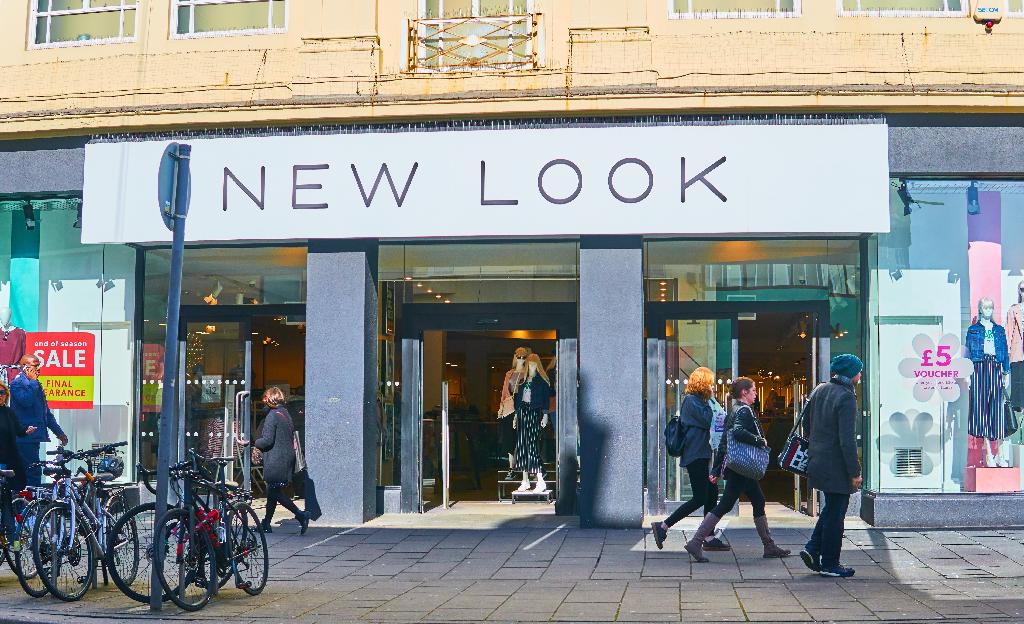
New Look lenders poised to take control as it slashes £1 billion debt pile. Lenders to New Look are ready to take control of the ailing fashion retailer as it tries to slash its £1 billion debt pile and stay afloat amid turbulence on the High Street, it emerged on Monday. The company’s executive chairman Alistair McGeorge said a refinancing deal will “secure the company’s future and grow profitability”. The fast-fashion chain, which has already closed 86 of its 593 stores in Britain and exited China, hopes to cut its debt to £350 million from £1.3 billion this summer. It will also seek to raise an extra £150 million by issuing new bonds on top of a string of existing ones. A group of bondholders to New Look have hired FTI Consulting to advise them on the chain’s restructuring, which is also advising lenders to struggling Debenhams.
JD Sports sales race ahead despite high street slowdown. Clothing retailer to expand international presence after buying Finish Line chain in US. JD Sports Fashion (JD.) has upgraded its profit outlook following strong Christmas sales, and is stepping up its expansion in the US, where it has opened its first five stores. Britain’s biggest sports retailer has been riding the athleisure boom – sportswear designed to be worn outside the gym – which has helped it avoid the collapse in fashion sales seen in other parts of the high street. Retailers are battling against rising rents and business rates, a shift to online shopping and waning consumer confidence. JD said like-for-like sales rose more than 5% in the 48 weeks to 5 January, up from 3% in the first half, while total sales (including newly opened shops) surged 15%. It said like-for-like sales were “consistently” positive over the Black Friday and festive period.
Investors upbeat on hopes LSE may make late bid to go for Norway’s Oslo Bors. Rumours that London Stock Exchange Group (LSE) may put in a last-minute bid for Norwegian stock exchange Oslo Bors set trading desks alight today. Oslo Bors has received a $729 million (£568 million) bid from pan-European stock-market operator Euronext but has not yet accepted the offer and wants to hear from other bidders. London Stock Exchange Group has been looking for opportunities ever since its mega-merger with Deutsche Börse was blocked by EU regulators in 2017. Traders said opportunities in the market remain scarce, with Euronext owning Paris, Brussels, Amsterdam, Lisbon and Dublin and London Stock Exchange running Borsa Italiana in Milan.
SSE hits out after Bulb claims big energy firms are squeezing families. Challenger companies’ low prices are unsustainable, says UK’s second-biggest supplier. A row has broken out between the UK’s second-biggest energy supplier and one of the largest challenger firms over whether small companies are pricing unsustainably or the big six are ripping people off. The renewable energy supplier Bulb criticised the big six for pegging their default tariffs only £4 on average below the government’s price cap, saying they were treating the measure as a target rather than a limit. The firm, which has grown rapidly since it entered the market in 2015 to more than 850,000 customers, accused the large players of “squeezing every last penny they can out of families”. Unusually, SSE (SSE) has hit back and suggested that smaller rivals are pricing at loss-making levels. Stephen Forbes, the co-head of SSE Energy Services, said companies of differing scale had bunched just below the cap, and rightly so. “It’s plain wrong to present this as a big-six issue. In total, 27 energy suppliers of all shapes and sizes have also set their prices within the same narrow range,” he said. “The reason for this is the cap has been set at a level which does not fully reflect the true cost of providing energy to all customers.” The default tariff offered by SSE is £4 under the cap of £1,337 based on typical energy use, compared with Bulb at £120 below. SSE linked that low pricing to Bulb posting a £23.7m loss for the financial year 2017-18.
Miner Kore Potash (KP2) is promising success for investors in Africa. Potash, a key fertiliser ingredient, has been a focus for retail investors ever since Sirius Minerals announced it was going to dig up the North York Moors to try to find the stuff. Like most mining projects, costs have overrun and in September last year it said it needed a further $400 million to $600 million to complete the project. One issue is potash’s volatile price, despite the fact it is a key crop nutrient. Since 2011 prices have dropped from $550 per tonne to just $226. Leading producers have all blamed rising competition in recent years for the sluggish prices, although oversupply as well as tumbling crop prices — particularly grain — have also played their part. Either way, this shouldn’t bother Kore as it expects to produce potash at the relatively low cost of $100 per tonne because of how shallow the mine is and its close proximity to ports. As far as mining projects in Africa go this is as good as any — grab a slice before it starts producing.
Revolution Bars warns on profits despite rise in Christmas trading. Revolution Bars Group (RBG) warned on profits on Monday, despite brisk Christmas party trade. The cocktail specialist, which has 79 bars in the UK, said it expects full-year earnings to be £12 million, rather than the £16 million analysts had forecast. Shares in the firm plunged 22p, or 18%, to 99.8p. Last month pre-booked party revenue at sites open for at least a year was up 11.7%, and total comparable sales up 2.6%. Boss Rob Pitcher cheered that growth, but said November wasn’t so busy and “Christmas trading came late”. Total sales in the first-half to December 29 increased 6.4%, but comparable sales dropped 4%. The company also had to grapple with higher business rates and wage bills
Ophir Energy turns down £343m offer from suitor MedcoEnergi. Ophir Energy (OPHR) today rejected a £343 million bid from Indonesia’s MedcoEnergi, saying the offer “undervalues” the company. The London-listed energy explorer, which is being advised by Morgan Stanley and Investec, said the board was unanimous in rebuffing the 48.5p-per-share bid made on January 11. Ophir, listed on the FTSE, saw its shares fall 2.5% to 44p after rejecting the offer. MedcoEnergi has until January 28 to table another bid. The group, founded in 1980, has twice approached Ophir with all-cash offers previously worth £410 million in October and £380 million in December.
Could Pizza Express be the next casualty of the High Street crisis? Restaurant chain owes £1 BILLION in debt, experts warn. The high street is poised for another blow following fears for the health of Pizza Express. Questions are being raised by industry sources about the ability of the restaurant chain to repay its debt. The company, owned by the Chinese private equity firm Hony Capital, is due to repay around £650million over the next three years. But its total debt stands at more than £1billion, according to the group’s 2017 annual report. Pizza Express faced interest costs of nearly £90million alone in 2017, when it made a £28.7million loss before tax.
AstraZeneca (AZN) chief medical officer Sean Bohen to leave in shake-up. One of AstraZeneca’s most senior executives is to leave the company as the drug embarks on a sweeping organisational shake-up. Sean Bohen, chief medical officer and head of global medicines development, will step down after less than four years in the job. He will remain at the company to help as it transitions to its new structure and until a new chief medical officer is announced. Chief medical officer is the most important and powerful position in a pharmaceutical company after the chief executive and finance director. The person is traditionally in charge of R&D and steering products from the lab into trials and then onto the market
Pagegroup (PAGE) boss predicts more growth despite China and Brexit wobbles. The boss of recruitment giant Michael Page has insisted it is on track for another year of strong growth despite signs of a slowdown in some of its markets towards the end of 2018. Net fees across the company, which employs 7,800 staff across dozens of countries, rose 15.9% to a record £815m in the 12 months to December. But it was dogged by economic uncertainty in the final quarter as worries over China’s trade relationship with the US cut growth in the country in half and its UK executive headhunting arm Michael Page shrank 1% amid Brexit worries