
Below are the key headlines from today’s updated papers, featuring the Financial Times, The Times, The Telegraph, The Daily Mail & more - see the full Press section here.
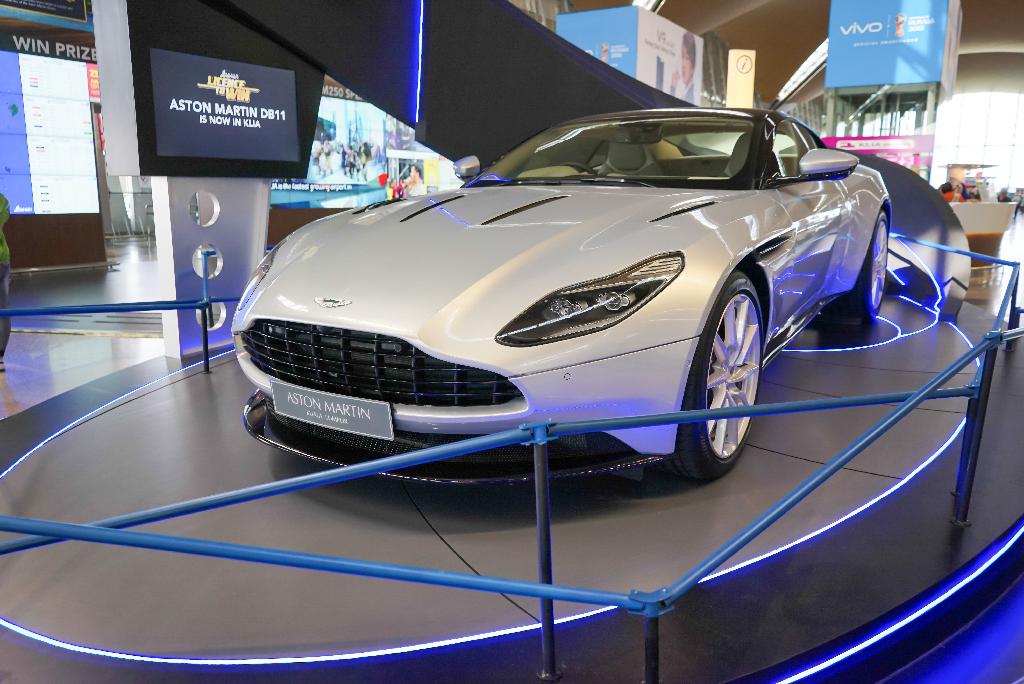
Aston Martin sets aside £30m for Brexit as revenues rise by 25%. Carmaker’s plans for no deal or disorderly exit from EU include £2m for revised supply routes. Aston Martin Holdings (AML) has set aside £30m in preparation for any Brexit-related disruption as the luxury carmaker reported strong revenues in its first set of annual results since its stock market debut. The company said it was setting aside the cash in readiness for no deal or a disorderly Brexit, including £2m for revised supply chain routes. It has hired a new supply chain chief and has made plans to fly in components or bring them in through naval ports. Andy Palmer, the chief executive, said a delay to Brexit would be a “further annoyance”. MPs could potentially vote on whether to delay Brexit on 14 March, a fortnight before the scheduled departure date of 29 March. Palmer added: “You’re holding that contingency stock for longer, which means that your working capital is tied up for longer. More importantly, what you’re doing is you’re creating continued uncertainty.”
Rolls-Royce suffers £186m hit from Airbus decision to scrap the A380. Rolls-Royce Holdings (RR.) was hit by a catalogue of engine problems on Thursday including an £186 million blow from Airbus ditching the A380 which helped push it into the red. The FTSE-100 engineering colossus, led by Warren East, said Airbus’ shock decision to end production early would force a major write-off of costs associated with manufacturing the Trent 900 engines which power the planes. Airbus stunned the aviation world earlier this month when it axed the A380 jumbo programme after only 12 years following a decision by its largest customer Emirates to scale back orders in favour of smaller planes. Rolls-Royce still has to supply 17 new A380s with Trent 900 engines over the next three years but the end of the programme will cost the business £186 million as it winds down production lines earlier than expected.
Telford Homes issues shock profit warning. London housebuilder Telford Homes (TEF) shook investors on Thursday as it slashed its profit outlook after project delays and a switch towards less lucrative build-to-rent schemes. Shares tumbled 59.9p to 291.3p — more than 17% — as the City dumped the shares. Telford admitted to a six-month delay at its City North scheme at Finsbury Park, where it has hit hold-ups “due to matters outside our control”. The firm is trying to coincide works with the building of a new entrance to Finsbury Park station but the six-month delay will mean £15 million in profits being booked in next year’s results. Telford has also seen “frustrating challenges” getting planning permission on a scheme in Bethnal Green.
London property slump pushes Foxtons to first annual loss since IPO. Nationwide says house prices dipped 0.1% in February from January to average of £211,304. The London estate agent Foxtons Group (FOXT) slumped to its first annual loss since its stock market debut six years ago, blaming a further fall in the number of homes sold and warning of a prolonged downturn in the capital’s property market. Foxtons, known for its hefty commissions and fleet of Mini Coopers, said low consumer confidence because of Brexit uncertainty, the impact of higher stamp duty introduced in 2016 and low affordability in London after years of rapid house price growth were weighing on the market. Nic Budden, the chief executive, said: “2018 was one of the toughest sales markets we have ever had in London, with transactions falling from [the previous] year’s historically low levels.” The agency sold 2,529 properties last year, down 15%, with the average price of a Foxtons sale dipping to £581,000, from £582,000 in 2017. The grim outlook came as Nationwide, Britain’s biggest building society, said house prices dipped 0.1% in February from January to an average of £211,304, while the annual growth rate in prices edged up to 0.4% from 0.1%.
Bovis Homes Group (BVS) profits were the highest ever last year as it focused on offering better quality homes, improved customer service and a boosting operating margins. Shareholders were also given a boost as the company’s board agreed to hike dividends by 20% to 57p for the 2018 financial year. Pre-tax profits grew by 47% to £168million, ahead of market expectations, the housebuilder said. Group revenue rose by 3.2% to £1.06billion, as the number of completions reached 3,759. The company’s focus on price optimisation and margin improvement paid off, as operating margin rose 390 basis points to 16.4%. Chief executive Greg Fitzgerald said: ‘The group has made substantial progress operationally over the past 18 months, delivering record profits and a step change in our operating margin. ‘We have transformed the quality of our product and customer service and are delighted this is reflected in our 4 star housebuilder status for 2018.
British Airways and Iberia owner International Consolidated Airlines Group SA (CDI) (IAG) has seemingly overcome a triad of challenges in the airline sector to report rising profits and sales. Despite significantly higher fuel costs, currency headwinds and air traffic control strikes last year, the firm chalked up a near 10 per cent rise in profits to £2.6billion. Meanwhile, sales advanced 6.7% to £20.88billion. The company said it was knocked by unfavourable exchange rates to the tune of £110.35million last year, and added that its fuel costs climbed 30%. With the currency impact stripped out, the profitability of each passenger seat – a key industry metric – jumped 2.4%. IAG boss Willie Walsh said: ‘It demonstrates the fantastic work that’s gone in in the past number of years where we’ve been strengthening the cost base of the business, the efficiency of the business, extending our network.’ The firm said it expects 2019 profits to be broadly flat.
Sharp drop in NHS revenues hits Spire Healthcare profits. Profits fell sharply at one of Britain’s biggest private hospital chains last year as it suffered an “unprecedented” drop in revenues from the NHS and invested in an overhaul of the business. Spire Healthcare Group (SPI) said pre-tax profits fell 63.9% to £8.2 million and revenue was broadly flat, down 0.1% to £931.1 million, in the year to the end of December. Stripping out exceptional costs, such as £17.9 million of hospital costs, including the closure of a clinic in Windsor, operating profit was down 41.2% to £54.2 million.