
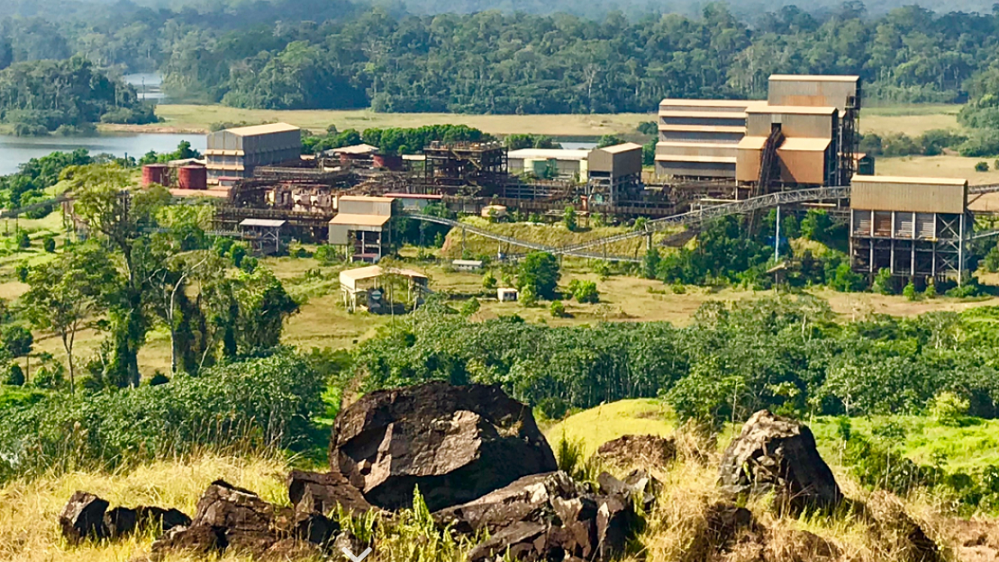

DEV Mineração SA, which is partnering Cadence Minerals (KDNC ) in the development of the Amapá iron ore project in Brazil, has completed the first payment under a court-ratified settlement with the Municipality of Pedra Branca do Amapari, resolving the final material municipal legacy issues inherited from prior operators of the project.
Under the Agreement, DEV will provide R$10 million in social compensation, including an initial R$5 million payment.
In return, the Municipality has lifted prior embargoes, confirmed that following execution of the Agreement DEV has no outstanding municipal liabilities covered by the settlement, and agreed to process and issue, where applicable, the routine municipal authorisations and certificates customarily required to support licensing and operational activities, strictly in accordance with applicable legislation.
Accordingly, the settlement removes historic municipal impediments, lifts ore transport restrictions and improves administrative clarity for routine permitting.
The settlement is funded by DEV under its Judicial Recovery Plan. Cadence has made no direct municipal payments.
Separately, Cadence, together with Pedra Branca Alliance Ltd, hosted a technical programme in London with Wandenberg Pitaluga Filho, President of the Economic Development Agency of Amapá.
The programme provided an opportunity to outline Amapá's long-term development pathway, integrated infrastructure potential and the typical financing frameworks applicable to large-scale mining developments. The discussions were technical and introductory in nature and were intended to support understanding of the scale, sequencing and capital requirements of Amapá.
Meetings were held with groups active across equity investment, institutional debt, royalty and streaming, offtake and prepayment finance, and logistics and infrastructure. All discussions were non-binding and exploratory, focused on capital availability, financing structures and customary requirements at different stages of project development.
The technical talks were constructive and met stated objectives, providing the State with increased visibility on the staged development pathway for Amapá and the depth and diversity of capital pools typically available in the London market for projects of this nature.
In line with the staged redevelopment strategy, current efforts remain focused on the grant of the mine's Installation Licence. As part of this process, DEV has submitted the supplemental archaeological study to the Instituto do Patrimônio Histórico e Artístico Nacional, whose clearance is required as part of the licensing process.
The Azteca plant at Amapá is forecast to produce approximately 380,000 to 400,000 tonnes per annum of iron ore concentrate grading approximately 65% iron, providing an initial operational platform to support further technical and feasibility work across the broader project.
The next phase of the project would like involve production of approximately 2.5 to 3.5 million tonnes per annum of DR-grade iron ore concentrate, utilising existing rail infrastructure and third-party port facilities.
The longer-term development plan for Amapá envisages production of up to 5.5 million tonnes per annum of DR-grade iron ore utilising integrated mine, processing, rail and port infrastructure.
"The resolution of these historic municipal matters represents an important step in resetting the Project's operating environment and removing long-standing administrative uncertainty inherited from prior ownership,” said Kiran Morzaria, chief executive of Cadence Minerals.
“While all regulatory decisions continue to follow Brazil's established statutory processes, this settlement provides clarity and stability as we advance the next stage of Amapá's staged redevelopment. Together with recent progress on Azteca financing and ongoing licensing work, these developments reinforce our disciplined strategy focused on risk management, capital discipline and long-term value creation."
View from Vox
Good to see so much positive momentum at Amapá, following the recent news of offtake funding. There’s clearly plenty of appetite on all sides to get this project developed, both as an initial start-up operation and as a longer-term, larger proposition. Much work still to be done, but momentum is now building.