
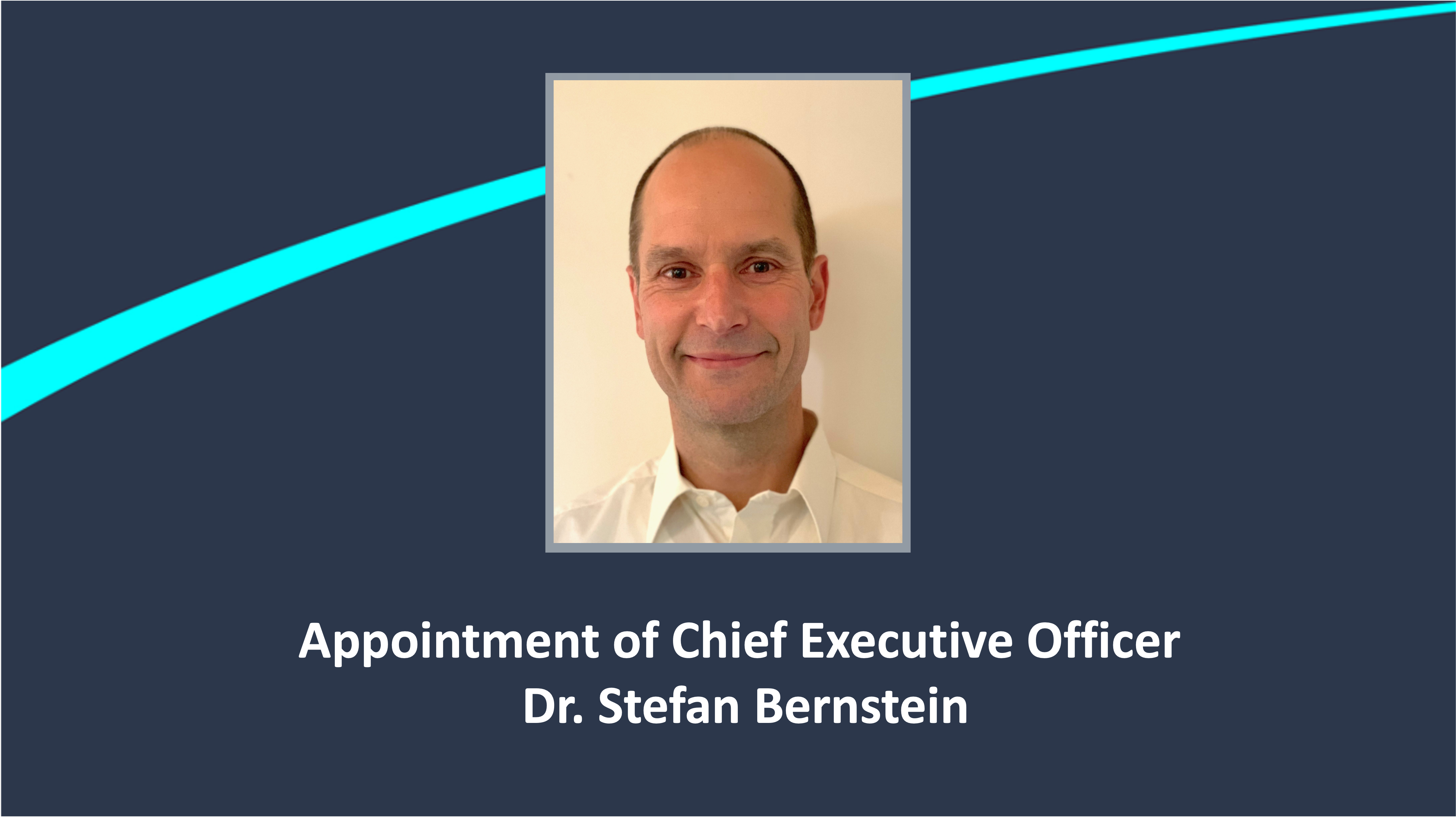
GreenRoc Mining (GROC ) announced that it has appointed Dr. Stefan Bernstein, a Danish geologist with over 30 years’ experience in Greenland’s mining sector, as CEO and Director.
The Company, which is focused on developing several critical mineral projects in Greenland, said Dr. Bernstein’s appointment will come into effect from 1 July 2022 and that he brings ‘a very strong knowledge and understanding of the country and its mineral wealth’ to the role.
Following this appointment, Mr. Lars Brünner, who has assumed the role of Interim CEO, will return to his role as a Non-Executive Director of the Company with effect from 1 July 2022.
Dr Bernstein will be joining GreenRoc from GEUS, the Danish and Greenlandic Geological Survey responsible for supporting the sustainable exploitation of raw materials in Greenland, where since 2016 he was the Head of the Mapping and Mineral Resources Department.
In this capacity, Dr Bernstein focused on developing Greenland’s known geology through integrated programmes in collaboration with the Ministry of Mineral Resources in Greenland.
Before that, among other roles, Dr Bernstein was Exploration Director, and latterly CEO, of Avannaa Resources Ltd, a Greenland-focused mineral exploration company which he co-founded in 2007 and which executed over 25 exploration programmes in the country.
Under these exploration programmes, Dr Bernstein discovered the Karrat REE deposit and the Disko Bay diamond province in West Greenland and subsequently secured two joint venture agreements with the major mining companies, Anglo American and Boliden.
Dr Bernstein has previously been involved in other deposit discoveries in Greenland, including the Platinova palladium-gold Reef located in the Skaergaard Intrusion, stratabound PGE mineralisation at the Kap Edvard Holm Complex, and the Citronen Fjord Pb-Zn deposit.
As CEO of GreenRoc, Dr Bernstein will be responsible for advancing the Company’s strategic asset portfolio. Notably, this includes the Amitsoq Graphite Project in southern Greenland (‘Amitsoq’), and the Thule Black Sands Ilmenite Project in north-west Greenland (‘TBS’), both of which GreenRoc is focused on advancing to development status during 2022 and beyond.
Commenting, Non-Executive Chairman of GreenRoc Mining, George Frangeskides, told investors: “With a comprehensive understanding of the country’s geological landscape, proven by his many discovery successes, and his formidable knowledge of Greenland’s mining sector, he [Dr Bernstein] is ideally equipped to drive our company forward to the attainment of our goal of achieving production from our flagship assets, Amitsoq and TBS.”
“Having attended the EIT Raw Materials Summit in Berlin this past week, it is clearer than ever that Europe is taking very seriously the need to secure the long-term supply to European industry of critical minerals such as graphite and ilmenite, and to do so from suppliers in or close to Europe that are subject to the highest standards of transparency, regulation and environmental and social governance. Greenland very much fits the bill in all those aspects and, with Stefan at the helm, I look forward to deepening our connections with these key international bodies as we move into the search for suitable offtake partners for our assets.”
Stefan Bernstein, said: “With a highly strategic portfolio of world-class assets in what I know to be one of the most resource-rich and mining-friendly countries in the world, GreenRoc’s value is clear. I am excited to join the team as we focus on propelling our project portfolio towards development and further unlocking the inherent value of our key assets, Amitsoq and TBS.”
He said activity at Amitsoq will centre on the upcoming Phase 2 drilling campaign at the island deposit which will build on the maiden resource of 8.28 million tonnes (Mt) at 19.75% Cg, adding that he is confident in the potential for achieving a significant upgrade in that resource given the recently expanded Exploration Target of 5-15 Mt at a grade range of 18-22% Cg.
The Environmental and Social Impact Assessment (‘ESIA’) work programmes have started at TBS, the fulfilment of which is a fundamental part of the mining licence application process.
Dr Bernstein concluded: “I join the Company at a very exciting point in its development and am keen to get to work on making GreenRoc one of the next producers of critical minerals.”
View from Vox
Amitsoq Graphite is considered one of the highest-grade graphite deposits in the world, and since more than half of theExploration Target area for Amitsoq Island remains undrilled, GreenRoc’s upcoming drill programme will focus on unlocking this resource potential.
In recent weeks, GreenRoc has significantly increased the exploration target for the Amitsoq Island graphite deposit at the company’s Amitsoq Graphite Project in southern Greenland.
Following the maiden resource estimate announced on 8 March 2022, the exploration target for the Amitsoq Island deposit was recently updated by the company. The new exploration target has increased from a tonnage range of 1.7 Mt-4.5 Mt at a grade range of 24-36%.
The company said there is additional considerable upside potential to come from the, as yet undrilled deposit, which is also known as the “Kalaaq Deposit”, to the south of Amitsoq Island; Greenroc said a revised Exploration Target calculation is being undertaken for this deposit.
If the upper end of the company’s revised exploration target for the Amitsoq Island Deposit is successfully converted into defined Resources following the planned further drilling, GreenRoc said this would place Amitsoq “not only as one of the highest-grade projects globally but also with Resource tonnes which compare favourably with those of Vittangi.”
In a broader context, graphite is considered the core component of an Electric Vehicle (“EV”) battery, with the commodity driving global graphite demand and prices. UBS is estimating a natural graphite deficit of 3.7Mt by 2030, representing around 37% of the global market.
GreenRoc’s technical work to date has confirmed that Amitsoq graphite can be upgraded to a more than 99.95% pure graphite product, which is the specification requirement for EV batteries. As a result, it says it is well positioned to capitalise on the transition to Net Zero.
Graphite is required for lithium-ion batteries used in electric vehicles and represents between 20 and 24% of the material needed in a battery. According to analysts at Baker Steel, between 2020 and 2040, a 22-fold increase in graphite for energy technology demand is forecast, and a 10-fold increase across all applications, an increase second only to lithium.
Follow News & Updates from GreenRoc Mining: