
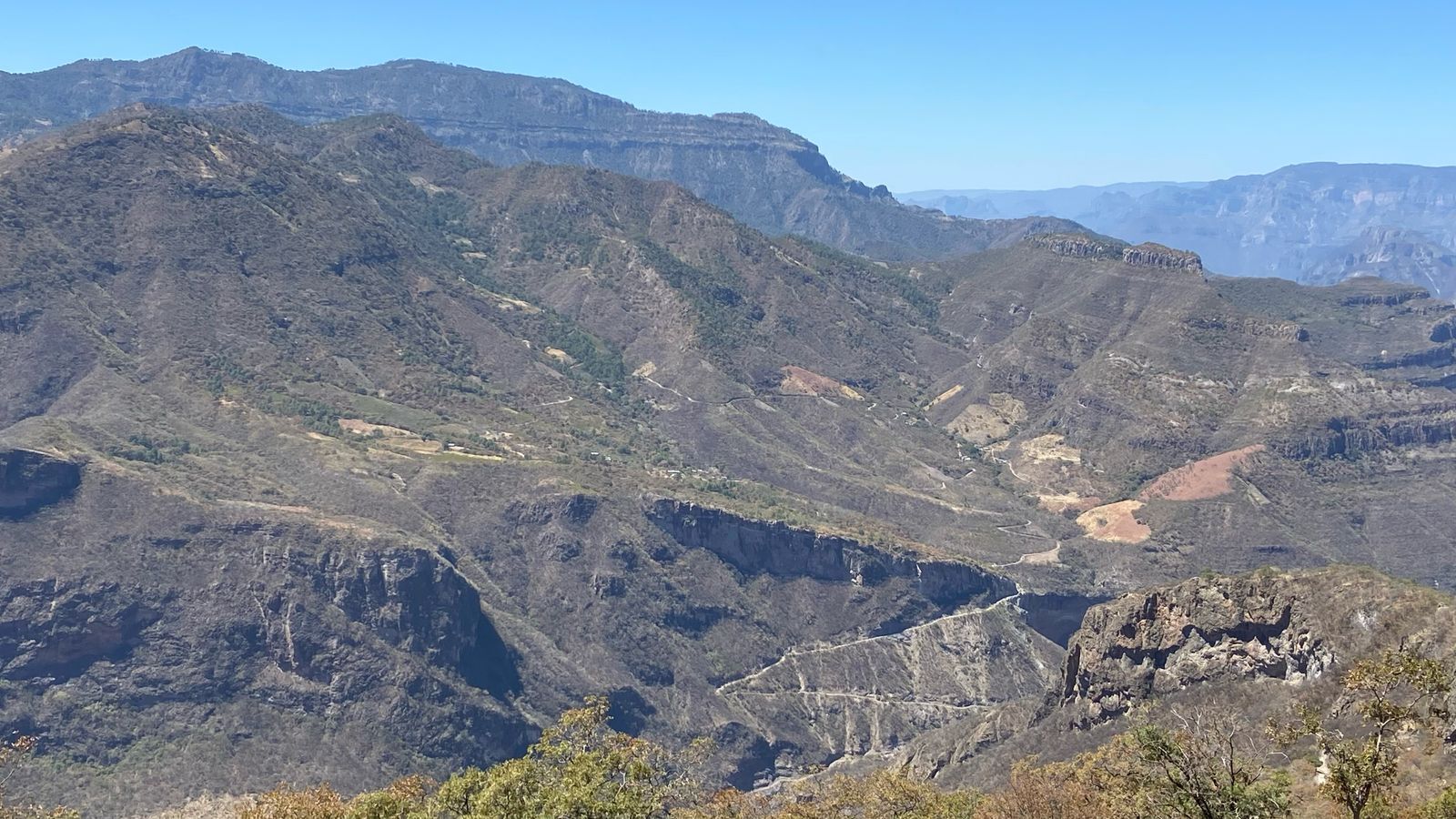

An airborne LiDAR survey recently flown by Pinnacle Silver and Gold (PINN) over its high-grade El Potrero gold-silver project in Durango, Mexico has confirmed known structural trends, as well as outlining previously unknown structures.
The survey also identified a total of 64 adits, 6 shafts and 51 prospecting pits on the two claim blocks comprising the project.
“The LiDAR survey was highly successful in confirming the 1,600 metre known strike length of the Dos de Mayo vein system and, perhaps more importantly, has identified new structures, often with artisanal workings that may indicate the presence of vein material,” said Robert Archer, Pinnacle’s chief executive.
“The sheer number of historic shafts, adits and pits interpreted from the LiDAR survey underscores the prospectivity of the project and, to date, we have focused only on the northernmost 10% of the property. As such, we are adding to our geological team to follow up on these new targets.”
On the northern, or ‘El Potrero’, claim block the majority of the 3 shafts, 50 adits and 29 pits clearly outline the known trace of the Dos de Mayo vein system and the more limited exposures of the El Capulin and La Estrella veins.
However, the LiDAR also indicates the potential for an extension to this system to the southeast, across the river valley, where it would be hosted in similar andesitic rocks.
In addition, there appears to be a previously unknown northeast-southwest trend on the southeast side of the valley, also in andesites, while similar northeast-southwest trends are observed in the southwest section, and are likely hosted by intrusive rocks.
This latter scenario could give rise to a different, intrusive-related, style of mineralization.
Regionally, northeast-trending structures pre-date the northwesterly trend and are host to the silver-lead-zinc-gold veins of the Topia mine, 13 kilometres to the southwest.
On the separate Maria Fernanda 2 claim block to the southwest, 3 shafts, 14 adits and 22 pits are somewhat scattered across the concession.
While this area has never been explored by modern methods, government maps indicate a northwest-southeast trending structure passing through the middle of the block, parallel to the Dos de Mayo system and to the regional structural trend.
The LiDAR also indicates a number of smaller structures perpendicular to this trend. The road from Topia passes through the middle of the block and road cuts locally display intense argillic alteration and pervasive chloritization with minor pyrite that, collectively, may be indicative of a buried hydrothermal system.
Several of the pits interpreted from the LiDAR appear to lie in close proximity to this zone. Pinnacle’s geological team is planning a systematic and thorough evaluation of the area, commencing early in the New Year.
The LiDAR survey covered the entire 11 square kilometres of the property and was flown by Eagle Mapping Ltd. of Langley, British Columbia.
View from Vox
Encouraging to see the LiDAR survey outlining new as well as existing structures. Pinnacle has long known that the area it’s operating in is highly prospective, but exactly how prospective is only now beginning to become clear. Expect Pinnacle to be very busy this year.