
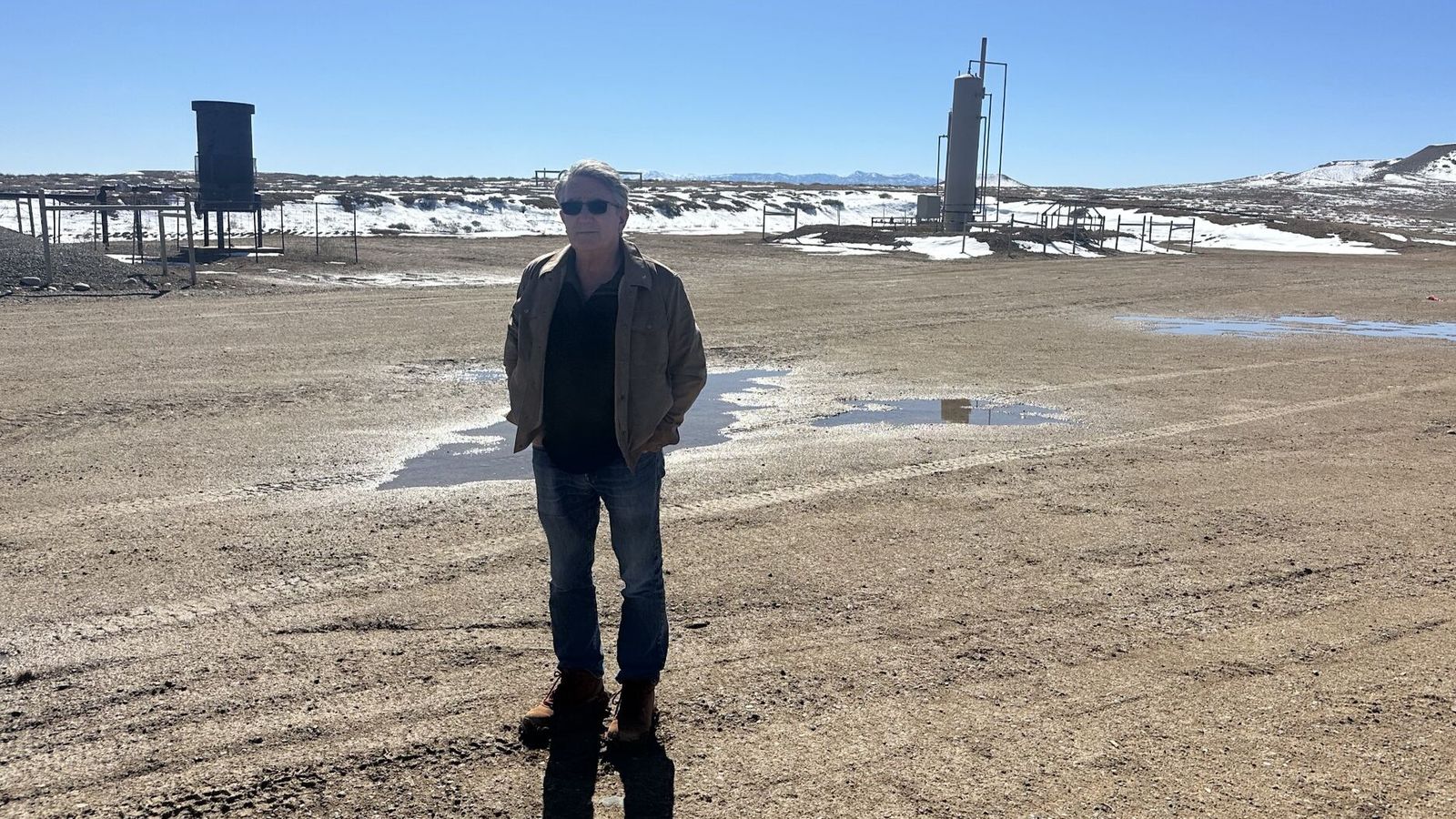

Quantum Helium (QHE ) has completed its fracture stimulation programme at the Sagebrush-1 project in Colorado.
The programme has delivered important technical and operational achievements, generating valuable new reservoir information to support future drilling and development across Quantum's Colorado portfolio.
Utilising an existing well originally drilled for oil allowed Quantum to evaluate the Leadville Formation without the multimillion-dollar expense of drilling a new well.
Combined with high-resolution 3D seismic data across Sagebrush and Coyote Wash, the results support plans for future Sagebrush drilling targets in 2027.
The programme successfully brought helium-bearing gas to surface, further confirming the presence of helium within the reservoir. Although a commercial flow rate was not established, technical results and extensive 3D seismic support advancing future Sagebrush drilling targets, with future wells purpose-designed for helium production.
Given the age of Sagebrush-1 and the specification of its existing casing, the well was not suitable for long-term commercial helium production. Its principal value to Quantum has been as a technical evaluation well, providing important information to guide the development of the wider Leadville resource.
Future commercial production would require purpose-designed wells incorporating appropriate CO₂-resistant tubulars and equipment. The company is also evaluating whether alternative locations on the Leadville structure, or potentially horizontal drilling techniques, could provide improved reservoir access and commercial deliverability.
The stimulation programme was completed significantly under budget, demonstrating the company's disciplined and cost-effective approach to evaluating the Leadville helium opportunity.
Quantum believes that the technical information obtained from Sagebrush-1, together with its high-resolution 3D seismic coverage, provides sufficient evidence to advance plans for new drilling at Sagebrush during 2027. This supports further drilling and development planning, rather than establishing commercial deliverability.
Importantly, unlike Sagebrush-1, which was originally drilled to target oil in the Ismay Formation, future Sagebrush wells would be purpose-designed and strategically located to target the most prospective sections of the helium-bearing Leadville Formation.
By combining the geological and engineering knowledge gained from Sagebrush-1 with its detailed 3D seismic, Quantum believes it is now significantly better positioned to identify optimal drilling locations and design future wells specifically for helium production. This evaluation will also consider the potential benefits of horizontal drilling to improve access to productive reservoir intervals.
Meanwhile, due diligence and advanced discussions are underway regarding the potential acquisition of producing and near-term producing helium assets
These opportunities are being evaluated with a particular focus on assets that could provide an accelerated pathway towards helium production, near-term revenues and longer-term growth, while complementing Quantum's existing portfolio of independently assessed helium resources.
"The Sagebrush-1 programme has been an important and highly informative step forward for Quantum,” said Howard McLaughlin, chief executive of Quantum Helium.
“We have successfully completed a substantial fracture stimulation programme and acquired an exceptional amount of new technical information about the Leadville Formation. This work has given us valuable new insights that will inform the next phase of our development strategy. We should remember that Sagebrush-1 was originally drilled to target oil in the Ismay Formation, not helium in the deeper Leadville. Following our acquisition of the project, we recognised the opportunity to use this existing wellbore to evaluate the Leadville helium potential, saving several million dollars compared with drilling a new well. Given its age and original casing specification, Sagebrush-1 is not suitable for long-term commercial helium production. The well has nevertheless served as a valuable technical evaluation well, significantly advancing our understanding of the Leadville Formation at a fraction of the cost of drilling a new well.”
He continued: "We have repeatedly confirmed the presence of helium, and our independently assessed resource remains unchanged. The challenge now is to determine the most effective engineering solution to commercially develop that resource. This may involve drilling at more favourable locations on the Leadville structure, potentially using horizontal wells, with new production wells incorporating the appropriate materials and completion designs. The extensive information gathered through Sagebrush-1, combined with our high-resolution 3D seismic, provides a much stronger technical foundation for making those decisions.”
View from Vox
It’s worth remembering that Quantum Helium has already booked over 1.1 billion cubic feet in helium resource in Colorado, and as such is one of the most significant helium companies listed in London. A great deal has been learned from the recent Sagebrush-1 programme and a lot of work now lies ahead of the company as it sets its sights on drilling in 2027. The possibility of acquisitions adds a little spice too, and it will be interesting to see what developments take place on that front.