
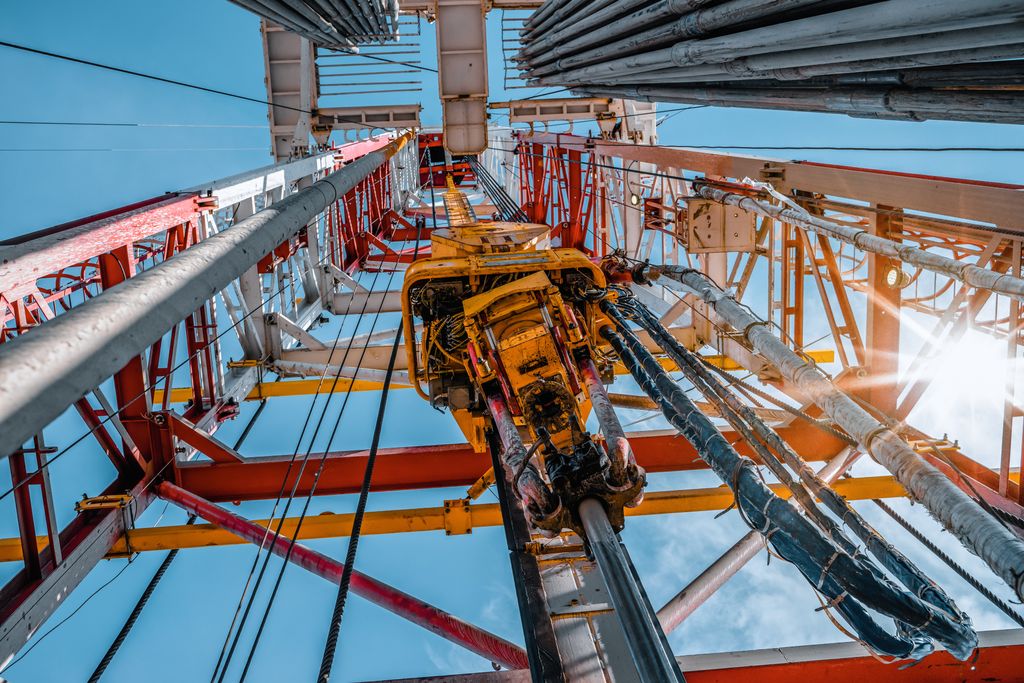
Eco (Atlantic) Oil & Gas (ECO ) said the Sapote-1 well on the Canje Block, offshore Guyana has been spudded and that the upcoming drilling of the well is expected to take up to 60 days.
The oil and gas exploration firm, which holds licences in Guyana and Namibia, was officially informed today by its investee company, JHI Associates Inc, about the spudding of the well.
The Sapote-1 well is located around 225 km northeast of Georgetown in 2,550 m of water and is being drilled with the Stena DrillMax drillship. The well is designed to test Upper Cretaceous reservoirs in a stratigraphic trap and the drilling of the well is expected to take up to 60 days.
Eco holds an indirect interest in the Canje Block as a result of its transaction to acquire up to 10% interest in JHI, and JHI is fully funded for the ongoing program on the Canje Block, including for the Sapote-1 well and any additional potential wells considered for this year.
The Sapote-1 prospect is in the south eastern section of Canje, around 50 km north of the Haimara discovery in the Stabroek Block which encountered ~207 ft (63m) of high-quality, gas-condensate bearing sandstone reservoir and around 60 km northwest of the Maka Central discovery which had ~164 ft (50m) of high-quality, oil-bearing sandstone reservoir.
The Canje Block is operated by natural gas firm ExxonMobil and is held by Working Interests partners Esso Exploration & Production Guyana (35%), with TotalEnergies E&P Guyana B.V. (35%), JHI Associates (BVI) Inc. (17.5%) and Mid-Atlantic Oil & Gas Inc. (12.5%).
"With other drilling targets in the region having yielded significant discoveries, now totalling billions of barrels of oil and oil equivalent, we are excited about the potential of the Sapote-1 well and look forward to receiving the well results in due course,” said CEO, Gail Holzman.
He added, “We also are keen to deliver additional drilling success with our next exploration campaign on our neighbouring Orinduik block in the Basin and the follow-through potential of Exxonmobil's recently announced multiple well pre-permitting on the Canje Block next year.”
Holzman said the Company is entering “a very busy period of drilling and updating drilling plans.” Looking ahead, Eco expects to report its Sapote-1 results “in the coming months.”
Meanwhile, in a separate statement released this morning, Eco published results for the three months ended 30 June 2021 in which it reported the value of its total assets at US$17.9m.
As at period-end, Eco reported total liabilities of $2.7m and total equity of US$15.2m. Cash and cash equivalents stood at $4.85m, while as of 30 June 2021, the company had no debt.
At the Orinduik Block in Guyana, Eco said seismic data reprocessing has been completed and multiple light sweet oil drilling prospects are being reviewed by Eco and its licence partners, with high-graded candidates being considered for the 2022 drilling programme.
The Company said it intends to provide further definition to the upper and lower Cretaceous interpretation and target selection for drilling and that target selection is expected in 3Q21.
“It has been a busy period for Eco as we endeavour to realise significant value for shareholders from our world-class asset base. The JHI transaction ensured we have a near-term catalyst for potential drilling success and demonstrated our commitment to expanding our presence in Guyana, a proven and prolific hydrocarbon basin,” said Holzman.
"With regard to the rest of our portfolio, we are excited about the outlook for the Company’s significant acreage in Namibia, as we continue to make progress across our four licences and await the two high-impact wells to be drilled by TotalEnergies and Shell in Q4 this year.
We remain committed to delivering exploration success in Namibia and will update stakeholders in due course. "We are upbeat about the Company's prospects for the rest of 2021 and are well placed to deliver long-term success into next year,” added Holzman.
View from Vox
In its recent annual results for the year ended 31 March 2021 Eco told investors that the business had made “significant strides” over the course of the 2021 financial year.
Addressing investors, Eco said Guyana ‘continues to be one of the most prolific exploration regions in the world, with over nine billion barrels of oil discovered in the last five years.’
Eco and its JV Partners have already delivered two substantial oil discoveries on the Orinduik Block and the Block continues to offer significant upside potential. With the recent increase in oil prices, the JV Partners will revisit the Jethro discovery commercialisation potential, it said.
As previously reported, Eco is fully funded for further planned / near term drilling on the Orinduik Block and, with its JV Partners, is assessing all opportunities available to drill at least one exploration well into the light oil cretaceous stacked targets as soon as practical.
Eco said it is fully aligned with its JV Partners on careful target selection for the next drilling campaign, based on the reprocessed 3D seismic data on the block and nearby oil discoveries. It expects to be able to update the market on further drilling plans later in 3Q21.
As Eco plans to outline a new drill programme in 3Q22, the company has highlighted that the Guyana / Suriname Basin is set to mature from its current valuation to potentially 10 FPSOs and over a million barrels of production per day, expected mid-way through this decade.
Eco says this, supported by estimated breakeven prices of US$35, US$25 and US$32 per barrel recently reported by Hess in respect of discoveries on the nearby Stabroek block in the same region, proves extremely positive for the Orinduik partners and company stakeholders. The company highlighted to investors that this has motivated the drive to additional drilling.
Follow News & Updates from Eco Atlantic Oil & Gas here: