
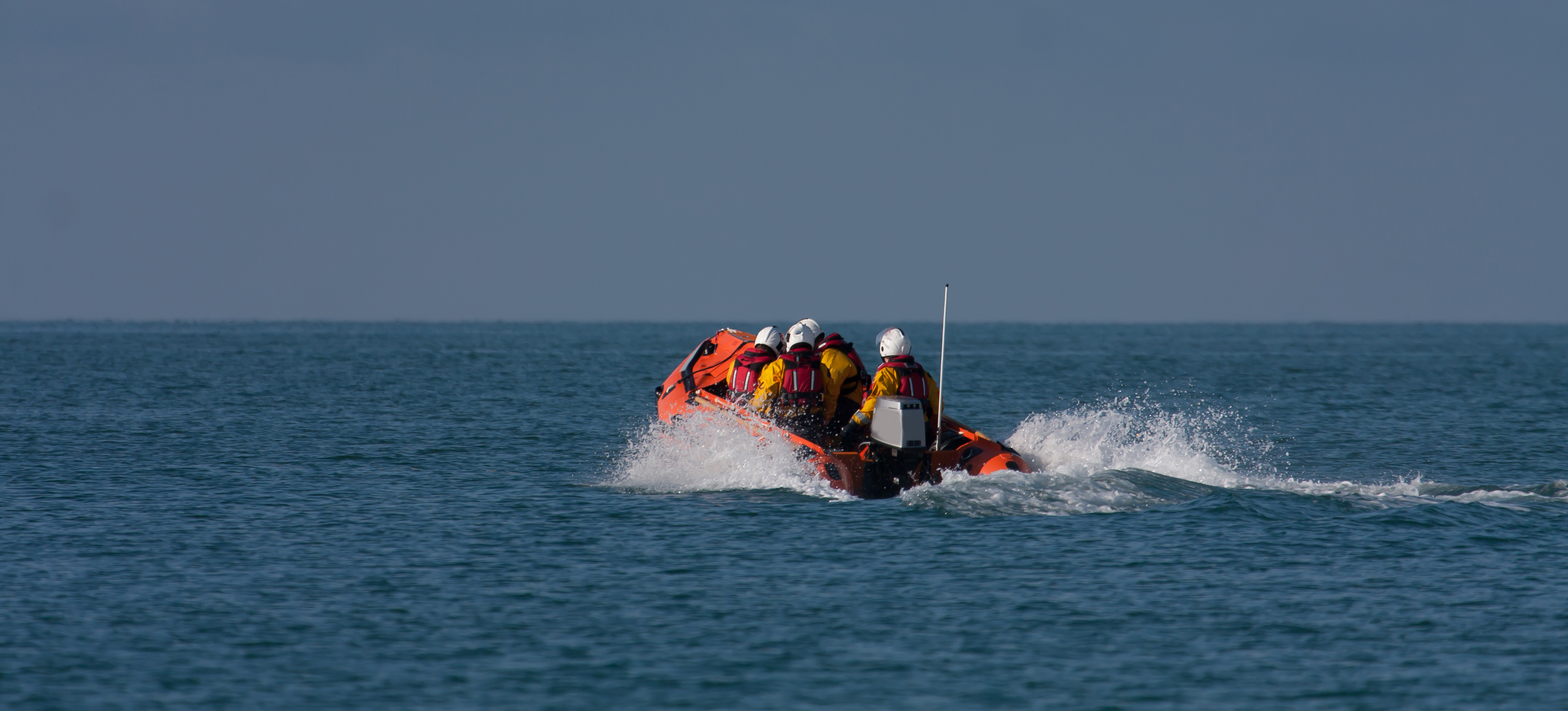
Harland & Wolff told investors that its subsidiary, Harland & Wolff (Appledore) has signed a framework agreement with the Royal National Lifeboat Institution (“RNLI”) while separately, the group’s subsidiary, Islandmagee Energy (“IMEL”), has obtained a full marine licence.
Harland & Wolff unveils new agreement and new full marine licence
Harland & Wolff told investors that its subsidiary, Harland & Wolff (Appledore) has signed a framework agreement with the Royal National Lifeboat Institution (“RNLI”) while separately, the group’s subsidiary, Islandmagee Energy (“IMEL”), has obtained a full marine licence.
The shipyard and energy infrastructure group said Appledore has signed a framework agreement with the Royal National Lifeboat Institution (“RNLI”) for the haul-out, repairs, maintenance, refurbishment and associated works for the RNLI’s fleet of lifeboats.
Under the terms of the agreement, Appledore will be responsible for the repairs, maintenance and other works programmes defined by RNLI for its fleet of lifeboats and other vessels. The deal will span several years and each docking will be priced as a bespoke agreement based on the scope of works required to be performed on each vessel that comes into Appledore.
The RNLI has a fleet of 431 lifeboats and 238 lifeboat stations that will require repairs and maintenance on a regular basis in order to keep them active and ready for deployment.
Under the terms of the agreement, Appledore will be working in conjunction with RNLI’s internal team to perform defined works programmes on vessels that come into the yard.
Whilst the size of each individual programme is not expected to be significant, given the size of a fleet, Harland expects ‘meaningful cumulative volumes and revenues on an annual basis.’
It said it considers the establishment of this relationship to be further validation of the group’s strategy of creating a local presence around major ship repair and fabrication hubs in the UK with a view to creating a consistent and long-term client base at each of its facilities.
John Wood, CEO of Harland & Wolff, commented: “I am delighted that Appledore has signed this framework agreement with the RNLI. The RNLI is a much-respected institution and we are privileged to be hosting its vessels at Appledore. Our capacity, capability and proximity to the RNLI’s main centres of activity has been crucial to the award of this contract.
This, once again, demonstrates that our strategy to be geographically diverse in order to attract local business is sound and bearing fruit. I look forward to a long-standing and growing relationship with the RNLI in the months and years ahead and will be looking at opportunities to support them, not only from Appledore, but also from all our sites across the UK.”
Separately, Harland & Wolff’s IMEL has now received the Environmental Consent Decision, Full Marine Licence, Abstraction Licence and Discharge Consent by the Department of Agriculture, Environment & Rural Affairs (DAERA) for the Islandmagee Gas Storage project.
It said the issuance of the full marine licence completes this ‘critical workstream’ and the Company will now work closely with DAERA in fulfilling its obligations under the terms of the licence and to take this project to the next stage so as to create value for shareholders.
The Islandmagee facility is expected to provide over 25% of the UK’s current natural gas storage capacity and will support the growing demand for gas-fired power development and renewable energy generation throughout the United Kingdom and the Irish Republic.
Once completed, the facility will consist of seven underground caverns, capable of storing a total of around 500 million cubic metres of gas in Permian salt beds, a technique that Harland said is environmentally friendly, safe and an efficient method of storing large volumes of gas.
In its interim results for the twelve-month period to 31 July 2021, Harland & Wolff Group reported a seven-fold increase in revenues to £10.18m and a gross margin of 24%, in line with Company’s expectations for the portfolio of contracts delivered during the period.
As a result of its performance, the Directors of the shipyard and energy infrastructure group now believe that the Company will achieve a cash break-even on an annualised basis by the end of the current financial year (31 December 2021) and will be EBITDA positive in 2022.
By period end, the Group had the largest fabrication footprint in the country, two of the largest dry docks in Europe and two of the largest specialist fabrication sites in the UK. Today, all sites are fully operational with each winning work and servicing clients, both new and repeat.
Going into the second half of the current financial year and into the next year, the Company said it expects to have greater visibility and certainty of monthly cash flows. Currently, it is in discussions to structure a group revolving credit facility that it will be able to draw-down on as and when required, ‘especially to fulfil the working capital requirements of larger contracts.’
‘It is the Board’s view that the Company will benefit from having the ability to draw-down debt on an ongoing basis as the Company scales and wins larger contracts,’ the Company added.
Going forward, Harland & Wolff informed investors that it expects more robust activity and contracts as the global economy normalises in 2022 and beyond. It said it is confident that revenue for the 17-month period to December 2021 will be in line with market expectations.
Follow News & Updates from Harland & Wolff here: