

Rome Resources (RMR ) has confirmed the persistence of high-grade tin mineralisation at depth below the established resource at the Kalayi prospect in the Democratic Republic of Congo.
Multiple multi-metre high-grade intervals were intersected in the company’s latest round of drilling.
As at 15 February 2026, a total of 1,602 metres of core drilling has taken place on Kalayi during this current drilling campaign.
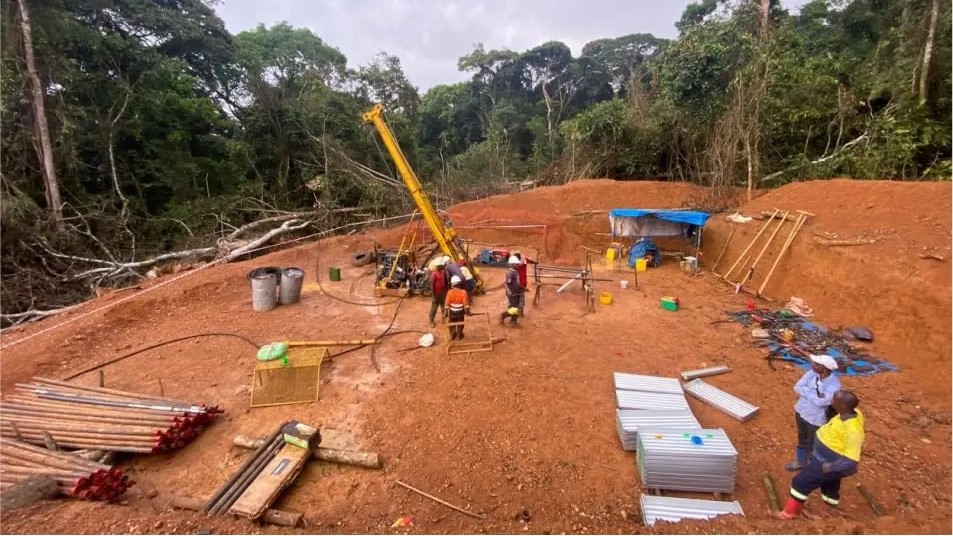
Since the previous update on 5 February 2026, two drill rigs have been operating at the Kalayi Bisie North prospect.
Initial on-site results, drawn from XRF, include one metre at 1% tin at 30 metres and six metres at 0.6% tin at 35 metres depth, 11 metres 3.43% tin from 60 metres depth, four metres at 7.5% tin from 75 metres depth, and three metres at 2.64% tin from 116 metres depth.
These results offer an interesting comparison with the Mpama North mine, operated by Alphamin approximately eight kilometres to the south of the Bisie North project. At Mpama North the main vein is reported as being between two and 22 metres in thickness, with an average tin grade of 4.35%.
Several recent intercepts at Kalayi fall within the reported thickness range of the Mpama North main vein and include multi-metre intervals grades above 3% tin, with high-grade zones exceeding 5% tin.
The continued intersection of such grades in the deeper drillholes supports the company's structural interpretation and reinforces confidence that high-grade tin mineralisation persists at depth below the maiden resource.
"We are highly encouraged by the continued high-grade tin intercepts at depth at Kalayi, which provides further validation of our structural model,” said Paul Barrett, chief executive of Rome Resources.
“Delivering multi-metre intervals grading above 3% tin, including zones exceeding 5%, is a strong technical outcome from this phase of the drilling campaign. Kalayi lies within the same regional structural corridor as the Mpama North mine operated by Alphamin, approximately eight kilometres to the south. While it remains early in our evaluation, the widths and grades encountered to date support the strength of this geological analogy and reinforce our confidence in the system we are defining. As drilling continues, we expect to further refine our understanding of the scale and continuity of mineralisation ahead of the anticipated resource update in the coming months. In parallel, our advanced geological modelling work at Mont Agoma is refining our next phase of drill targeting, and we expect to provide a further update on this work shortly. We look forward to discussing our progress announced to date at both prospects during our investor call on 19 February 2026."
View from Vox
With tin currently trading at approximately US$50,000 per tonne, the delivery of multi-metre high-grade intercepts is highly encouraging, and continues to highlight the significant extent of the mineralised footprint at Bisie North.